.png)



What Is Causing Drain Flies in My Nacogdoches Home, and Who Can Help?
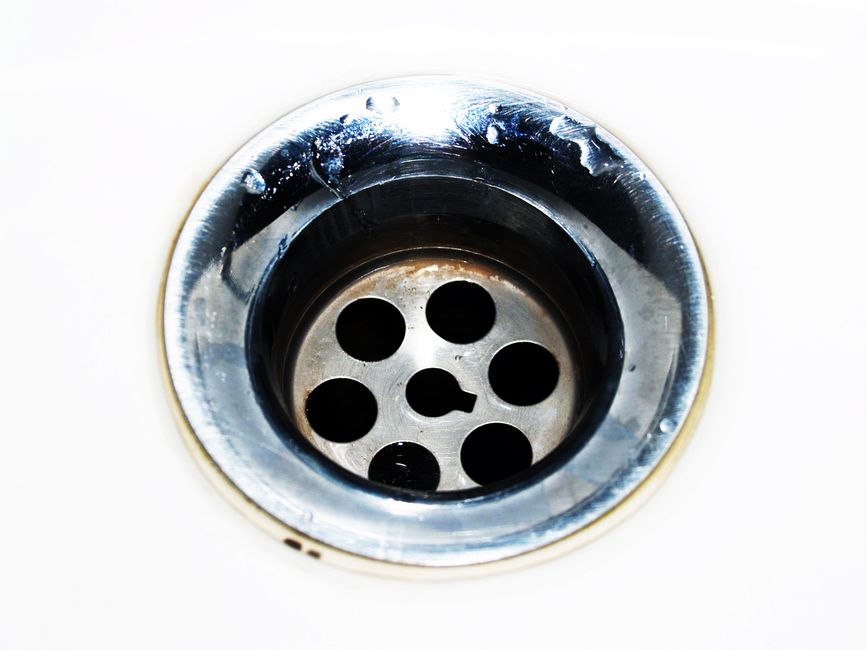
What causes drain flies in your home comes down to one core problem: organic matter buildup in moist, slow-moving drains. When bacteria, hair, grease, and food debris collect inside your pipes and form a slimy biofilm, drain flies move in to feed and breed. They don't need much — just a thin layer of wet organic material and a little standing water.
If you need help with drain flies in Nacogdoches, TX, call Spot On Pest Control, LLC at (936) 398-8381.
Here are the most common causes of drain flies in a home:
- Slow or clogged drains that trap organic debris and moisture
- Gelatinous biofilm coating the inside walls of sink, shower, and floor drain pipes
- Infrequently used drains where stagnant water sits undisturbed
- Leaking pipes or plumbing that create damp spots under slabs or in crawlspaces
- Refrigerator drain pans with standing water underneath the appliance
- AC condensate lines and drip trays with algae and moisture buildup
- Overflow holes in sinks and bathtubs that rarely get cleaned
If you've spotted small, fuzzy, moth-like insects hovering near your bathroom sink or shower in Nacogdoches, TX, you're almost certainly dealing with a drain fly infestation — and the source is likely closer than you think.
Drain flies (also called moth flies or sewer flies) are tiny insects, measuring just 2–4 mm long, with hairy wings and weak, erratic flight patterns. They don't bite, but they reproduce fast. A female can lay up to 200 eggs at a time directly inside the slime layer of a drain pipe, and those eggs can hatch in as little as 24–48 hours. Left untreated, a small nuisance can turn into a full-blown infestation within a matter of weeks.
The frustrating part? Spraying adult flies or pouring bleach down the drain rarely solves the problem. As long as the biofilm inside your pipes remains intact, new generations keep hatching. That's why understanding the root cause is essential before reaching for any fix.
What causes drain flies in your home helpful reading:
Understanding What Causes Drain Flies in Your Home
To truly tackle a drain fly problem, we have to look below the surface. Many homeowners in East Texas think these pests just appear out of thin air, but they are actually drawn to very specific conditions.
The primary culprit is organic matter that accumulates in your plumbing. Over time, every time we wash our hands, rinse dishes, or take a shower, small amounts of soap scum, skin cells, hair, cooking grease, and food particles stick to the inside of the pipes. This mixture creates a thick, gelatinous substance known as biofilm.
This biofilm is the perfect nursery for drain flies. It protects their eggs and provides an endless buffet for the larvae once they hatch. Because the biofilm is sticky and water-resistant, normal water flow won't wash it away.
Stagnant water and slow drains compound the issue. When a drain runs slowly, it gives the organic debris more time to settle and cling to the pipe walls. If you have a guest bathroom, a wet bar, or a floor drain that rarely gets used, the water trap (the P-trap) can dry out or become stagnant, inviting these pests to move in and start breeding.
Recognizing the early warning signs can save you weeks of frustration. You can read more about how to spot these pests early in our guide on Signs You Have a Drain Fly Problem.
How to Identify What Causes Drain Flies in Your Home
Before you can treat the problem, you need to make sure you are actually dealing with drain flies and not another common household pest. Homeowners frequently confuse drain flies with fruit flies or fungus gnats. However, their physical traits and behaviors are quite different.
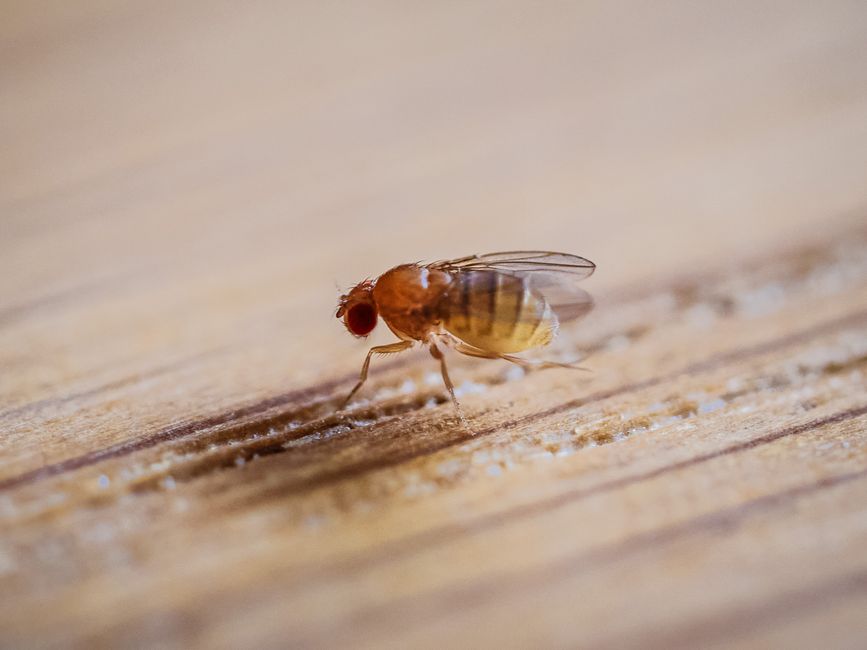
- Physical Appearance: Drain flies (Psychodidae) are tiny, measuring only 2 to 4 mm (about 1/16 to 3/16 of an inch) in length. They have a light gray, tan, or black fuzzy body covered in fine hairs, giving them a distinct moth-like appearance. Their wings are broad, oval, and covered in tiny scales. When they rest, they fold their wings flat over their backs like a tiny roof.
- Flight Patterns: Unlike other small flies that zip around quickly, drain flies are incredibly weak and erratic fliers. They usually only fly a few feet at a time, often crawling along walls, sinks, or ceilings near their breeding source. If you swat at them, they will disappear in a tiny, dusty cloud of fine scales.
To help you tell them apart, look at this quick comparison table:
| Pest Type | Size | Physical Appearance | Primary Breeding Source | Flight Behavior |
|---|---|---|---|---|
| Drain Fly | 2–4 mm | Fuzzy, moth-like, gray/black body, roof-like wings | Organic biofilm inside drains, sewers, and wet areas | Weak, erratic, short hops along walls |
| Fruit Fly | 3–4 mm | Tan/brown, smooth body, bright red or dark eyes | Overripe fruits, vegetables, fermenting liquids | Fast, hovering, attracted to food and sweet smells |
| Fungus Gnat | 2–5 mm | Dark, slender body, long legs (resembles a tiny mosquito) | Overwatered houseplant soil, decaying roots | Weak fliers, hover close to soil surface |
The Biological Factors Behind What Causes Drain Flies in Your Home
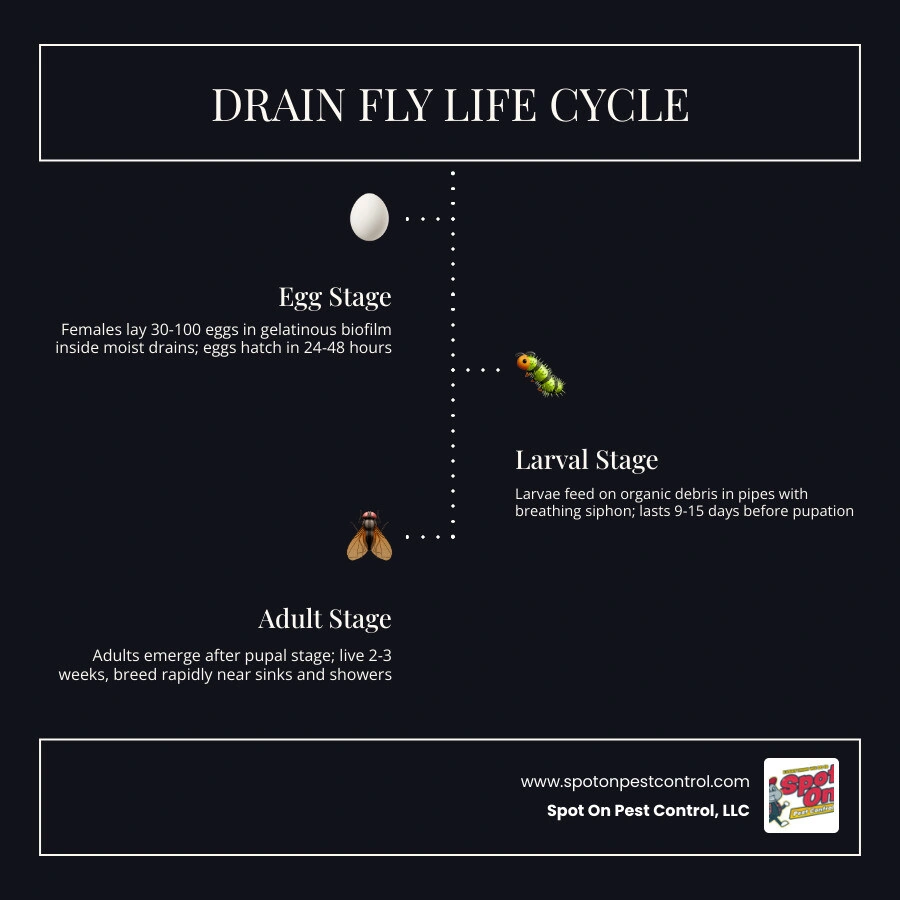
Understanding the biology of these insects explains why they are so difficult to eliminate with simple surface sprays. Drain flies undergo complete metamorphosis, which includes four distinct stages: egg, larva, pupa, and adult. Under warm, favorable conditions—like a typical Nacogdoches summer in June 2026—this entire life cycle can be completed in as little as 8 to 24 days.
- The Egg Stage: A single female drain fly can lay between 30 and 100 eggs (and sometimes up to 200 eggs) at a time. She deposits them directly into the moist, gelatinous biofilm lining your pipes, just above the water line. These eggs are tiny and hatch incredibly fast—often in just 24 to 48 hours.
- The Larval Stage: Once they hatch, the larvae emerge to feed on the bacteria, algae, and decaying organic matter in the biofilm. Drain fly larvae are small, pale, legless worms measuring about 4 to 10 mm when mature. They possess a unique dark breathing tube (a siphon) that they extend through the slimy film to breathe air while remaining submerged in the sludge. Because of this siphon and their ability to trap air bubbles, larvae can survive submerged in water or low-oxygen environments for a day or more, making them highly resilient to flushing. This stage lasts about 9 to 15 days.
- The Pupal Stage: After feeding, the larvae transform into pupae on the surface of the organic debris. This stage is very brief, lasting only 20 to 40 hours (about 1 to 2 days) before the fully formed adult fly emerges.
- The Adult Stage: Newly emerged adults are ready to breed almost immediately. While adults only live for about 3 to 4 days without fluids, they can survive up to two weeks if they have access to moisture or liquid carbohydrates, such as nectar or condensation.
Because their life cycle is so short and they lay so many eggs, a tiny, unnoticed breeding site can quickly produce hundreds of flies in less than two weeks.
Common Breeding Sites Inside and Outside Nacogdoches Properties
While indoor drains are the most famous culprits, drain flies will breed anywhere they can find moisture and decaying organic matter. In our local Nacogdoches area, we regularly find them breeding in several key areas inside and outside the home.
Indoor Breeding Sites:
- Kitchen and Bathroom Sinks: The constant accumulation of food scraps, soap scum, and toothpaste creates a perfect biofilm layer inside the drain pipes and J-traps.
- Shower and Bathtub Drains: Hair, body oils, and shampoo residue build up inside these drains, creating a highly attractive environment for female flies to lay eggs.
- Sink and Tub Overflow Holes: These small safety drains rarely have water running through them, meaning they collect dust, moisture, and soap splatters without ever being flushed out. They are one of the most overlooked breeding grounds.
- Refrigerator Drain Pans: Stagnant water and dust collect in the evaporation pan underneath your fridge, making it a prime breeding spot that many homeowners never think to check.
- AC Condensate Lines: The damp drain pans and lines connected to your indoor HVAC unit can grow algae and mold, providing an ideal habitat.
For more details on keeping these specific areas clean, check out our guide on How to Get Rid of Drain Flies in Bathrooms and Kitchens.
Outdoor Breeding Sites:
- Clogged Rain Gutters: Wet leaves and decaying organic debris in blocked gutters create a massive breeding ground right next to your roofline.
- AC Condensate Drips: Where your outdoor air conditioning unit drains onto the ground or concrete, algae can grow, attracting flies that can easily enter your home through nearby windows or doors.
- Garbage Cans and Compost Piles: Stagnant rainwater at the bottom of dirty trash bins or overly wet compost heaps will quickly draw breeding adult flies.
- Leaking Pipes and Sump Pumps: Slow plumbing leaks under your home’s slab, in crawlspaces, or around outdoor sewer lines can saturate the soil with organic waste, leading to large-scale infestations.
Diagnostic Tests to Find the Source
If you see drain flies in your bathroom or kitchen, you need to identify exactly which drain or area is harboring the larvae before you start treatment. Treating the wrong drain is one of the most common reasons DIY attempts fail. Fortunately, you can easily find the source using simple household items.
The Clear Tape Test
This is the easiest and most reliable way to monitor your drains.
- Take a roll of clear packing tape or duct tape.
- Before going to bed, place a piece of tape sticky-side-down over the opening of the suspected drain.
- Leave about one-quarter of the drain opening uncovered so that air can still flow through (otherwise, the flies may not try to exit).
- In the morning, check the tape. If you see tiny, fuzzy flies stuck to the adhesive, you have successfully identified an active breeding site.
- Repeat this test on all drains in the room simultaneously to ensure you aren't missing secondary breeding locations.
The Inverted Cup Test
If you don't want to use tape, you can use a clear plastic cup.
- Lightly coat the inside of a clear plastic cup with vegetable oil or petroleum jelly.
- Invert the cup over the suspected drain opening before bed.
- Any adult flies emerging overnight will fly up into the cup and become trapped in the sticky coating.
- Check the cup the following morning to confirm if that specific drain is the source.
Effective Elimination: Why DIY Fails and How to Fix It
When homeowners first notice drain flies, their instinct is often to pour boiling water, bleach, or chemical drain openers down the pipe. While these methods are incredibly popular on internet forums, they rarely provide long-term relief.
- The Boiling Water Myth: Pouring boiling water down the drain may kill a few adult flies and larvae on contact. However, water flows down the pipe too quickly to heat the thick biofilm to a high enough temperature for long enough to kill all the embedded eggs and larvae. Within days, the survivors will hatch, and the flies will return.
- The Bleach Failure: Bleach is a powerful disinfectant, but it is a poor cleaning agent for thick organic sludge. It simply runs over the top of the gelatinous biofilm without penetrating it. The larvae living deep inside the slime layer remain completely safe and untouched. Furthermore, pouring large amounts of bleach down your drains can damage your plumbing, ruin septic systems, and release toxic chlorine gas if mixed with other household cleaners.
- Chemical Drain Openers: Harsh chemical drain cleaners are designed to dissolve hair and grease clogs, but they do not thoroughly remove the thin, sticky biofilm layer along the pipe walls. They are also highly corrosive and can degrade your pipes over time.
To truly eliminate drain flies, you must physically break down and remove the biofilm.
Step-by-Step Mechanical and Enzyme Cleaning:
- Mechanical Scrubbing: Remove the drain stopper or grate. Use a long, stiff-bristled drain brush (or a plumber's snake) to physically scrub the inside walls of the pipe. This breaks up the thick, sticky biofilm and dislodges the organic matter holding the larvae.
- Use an Enzyme or Microbial Gel: After scrubbing, apply a thick, clinging enzyme drain cleaner. Unlike liquid cleaners that wash away instantly, specialized drain gels are designed to cling to the vertical walls of your pipes. The natural enzymes and bacteria in the gel slowly digest and biodegrade the organic waste, destroying the food source and breeding ground for the larvae.
- Treat the Overflows: Don't forget to spray the enzyme cleaner into the sink and bathtub overflow holes, as these are common hiding spots that escape normal cleaning.
- Flush and Repeat: Flush the drains with warm water after the enzyme gel has had time to work (usually overnight). Repeat this process daily for 3 to 7 days to ensure you have completely broken the breeding cycle.
If you want to read more about professional-grade mechanical cleaning and why it is the gold standard, take a look at our articles on Efficient Drain Fly Removal and Drain Fly Removal in Nacogdoches.
Frequently Asked Questions About Drain Flies
Are drain flies a health hazard to my family?
Generally, drain flies are considered nuisance pests rather than direct health hazards. They do not bite, sting, or feed on human blood. However, because they breed and live in highly unsanitary environments—like sewage, slime, and decaying organic waste—they can carry bacteria and other pathogens on their hairy bodies.
When they land on clean kitchen counters, dishes, or food, they can mechanically transfer these contaminants. Additionally, in large infestations, the bodies of dead drain flies can disintegrate into a fine dust that can trigger asthmatic reactions or allergies in sensitive individuals. In very rare cases, their larvae have been associated with myiasis (an infection of human tissue), though this is extremely uncommon in residential settings.
Can drain flies live in toilets?
Yes, drain flies can breed in toilets, particularly in guest bathrooms, pool houses, or vacant properties where the toilet is rarely flushed. When a toilet sits unused, a fine slime layer of bacteria and organic dust forms along the waterline inside the bowl and the tank.
The stagnant water in the bowl and tank provides the exact quiet, moist environment that adult drain flies look for. To prevent this, make sure to flush infrequently used toilets at least once a week and clean the bowl regularly with a stiff toilet brush.
How long does it take to completely get rid of them?
A light infestation can sometimes be resolved in 2 to 3 days with thorough mechanical scrubbing and enzyme treatments. However, because of their rapid development, a moderate to heavy infestation typically takes about 3 weeks of consistent treatment to completely eliminate.
This extended timeframe is necessary to ensure you have completely broken the insect's life cycle. Even if you kill all the adults and larvae today, any eggs hidden deep in the biofilm will hatch over the next few days. Continuous cleaning ensures that newly hatched larvae have no food source and cannot survive to become breeding adults.
Conclusion
Knowing what causes drain flies in your home is the key to winning the battle against these persistent pests. While DIY scrubbing and enzyme gels can help resolve minor drain issues, deep-seated infestations—especially those stemming from hidden plumbing leaks, broken sewer lines, or complex commercial drains—often require professional help.
At Spot On Pest Control, LLC, we operate with a deep commitment to Christian values, bringing integrity, compassion, and excellence to every home we service in Nacogdoches, TX. As a family-owned company, we don't just treat the adult flies buzzing around your sinks; we use advanced diagnostic tools and eco-friendly, professional-grade treatments to target and eliminate the breeding biofilm at its source.
If you are tired of dealing with recurring pests and want a permanent, worry-free solution, we are here to help. We also offer 24/7 emergency availability when pest problems need fast attention.
Visit our Drain Fly Removal Nacogdoches TX page to learn more about our local services and schedule your inspection.
Let us handle the dirty work so you can enjoy a clean, pest-free home.
Our Services
Our pest control services cover ants, termites, bed bugs, rodents, mosquitoes, and other common pests, with customized solutions for both residential and commercial properties.