.png)



The Real Bed Bug Treatment Timeline from Start to Finish: What Nacogdoches Homeowners Need to Know
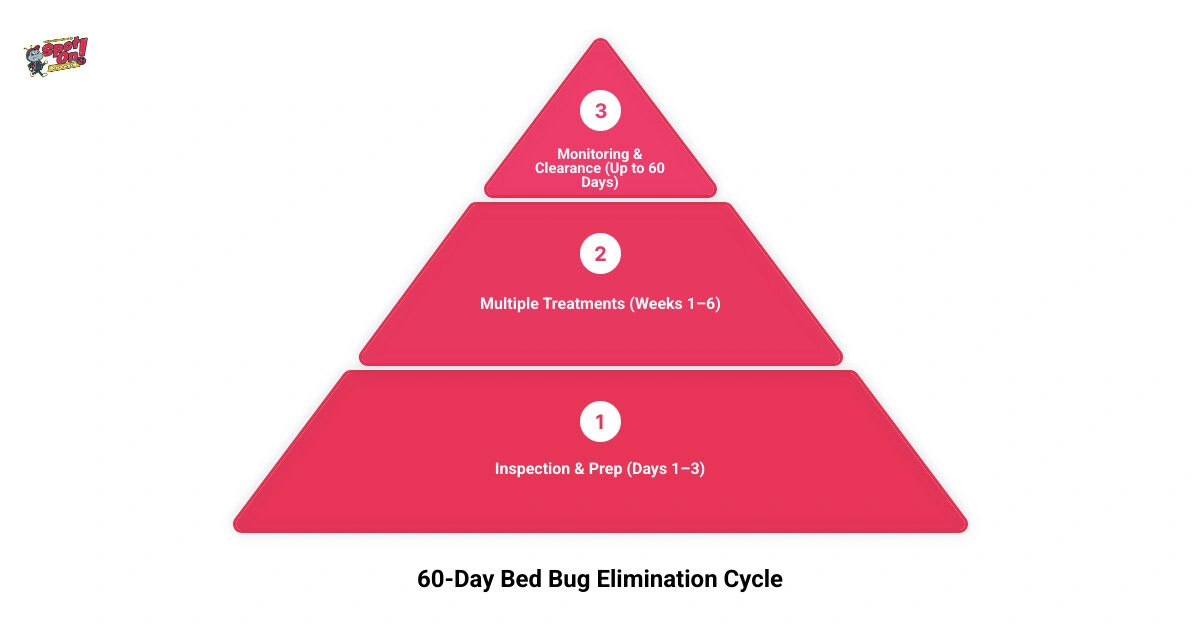
The bed bug treatment timeline from start to finish is not a quick fix — for most homes, complete elimination takes 4 to 6 weeks, and full confidence that the infestation is gone can take up to 60 days after the final treatment.
Here is a quick overview of what the timeline looks like:
| Phase | What Happens | Typical Timeframe |
|---|---|---|
| Inspection & Confirmation | Identify infestation scope | Day 1 |
| Preparation | Laundry, decluttering, vacuuming | Day 1–2 |
| First Treatment | Initial chemical or heat application | Day 2–3 |
| Follow-Up Treatments | Target newly hatched nymphs | Every 7–14 days, 2–4 visits total |
| Post-Treatment Monitoring | Traps, encasements, inspections | 60 days minimum |
| Final Clearance Check | Confirm full elimination | Up to 60–90 days from start |
Finding bed bugs in your home is a stressful experience — and one of the first questions most people ask is, "How long until this is over?" The honest answer is that bed bugs are one of the most difficult pests to eliminate. Their eggs are resistant to many treatments, they can hide in cracks as thin as a credit card, and a single missed egg cluster can restart the entire cycle. On average, pest control professionals require three or more treatment visits spaced weeks apart to break the bed bug life cycle completely.
Understanding what to expect at each stage helps you stay calm, cooperate fully with your treatment plan, and avoid the mistakes that drag the process out longer than it needs to be.
Understanding the Bed Bug Treatment Timeline from Start to Finish
To truly understand how long it takes to clear these pests out of your Nacogdoches home, we have to look at the biology of the pest itself. Bed bugs do not behave like ants or spiders. They are master hiders, and their eggs are practically bulletproof against standard over-the-counter sprays.

The overall timeline of your treatment depends heavily on two major factors: the severity of the infestation and the type of treatment you choose.
- Mild Infestations: If we catch the problem early—perhaps you only have a few bugs restricted to a single mattress—the timeline is shorter. However, even a minor infestation still requires a minimum of two visits over 3 to 4 weeks to ensure no eggs hatch and survive.
- Severe Infestations: If the bugs have traveled into the baseboards, behind the electrical outlets, or into adjacent rooms, the timeline can easily stretch to 6 to 8 weeks or longer, requiring 3 to 4 professional treatment visits.
The bed bug life cycle is the primary driver of this timeline. Under warm, ideal conditions, a bed bug can live for about 10 to 12 months. A single female can lay up to 500 eggs in her lifetime, depositing them in tiny, dark crevices. These eggs hatch in about 6 to 10 days. Once hatched, the young nymphs must feed on blood to grow, molting five times before reaching full adulthood.
This journey from egg to adult can take as little as 21 days in warm temperatures, but it can stretch to over four months if the air is cool. Because eggs are incredibly tough to kill, we must design the treatment timeline around these hatching windows.
If you are noticing itchy red bites or mysterious spots on your sheets, the first step is always accurate identification. You can learn more about identifying these pests in our guide on How to Know if You Have Bed Bugs.
Below is a comparison of how the two primary treatment methods affect your overall timeline:
| Treatment Type | Time to Knock Down Active Bugs | Number of Visits Required | Total Timeline to Resolution |
|---|---|---|---|
| Chemical Treatment | Days to weeks (gradual kill) | 2 to 4 visits spaced 10–14 days apart | 4 to 6 weeks |
| Heat Treatment | Same-day (hours) | Typically 1 main visit + follow-up inspection | 1 to 2 weeks (including monitoring) |
Phase 1: Preparation and the Initial Strike
The first phase of the bed bug treatment timeline from start to finish actually begins before we even apply our first treatment. Preparation is the single most important factor in how quickly we can eliminate the colony. In fact, skipping prep steps is the number-one reason professional treatments fail or take twice as long.
Before our technicians arrive, you must prepare your home by doing the following:
- Declutter Completely: Bed bugs love clutter because it gives them endless places to hide. Removing cardboard boxes, papers, and excess items from the floor improves our treatment effectiveness by over 70%.
- Launder Bedding and Clothing: Strip all sheets, blankets, pillowcases, and nearby clothing. Wash them in hot water (at least 130°F) and dry them on high heat for at least 30 minutes. The high heat of a standard clothes dryer is highly effective at killing 100% of bed bugs and their eggs.
- Vacuum Thoroughly: Vacuum all carpets, rugs, baseboards, and the seams of your mattresses and box springs. Once finished, immediately empty the vacuum contents into a plastic bag, seal it tightly, and take it to an outdoor trash can.
- Do Not Move Items to Other Rooms: This is a critical mistake! If you carry unsealed blankets or furniture out of an infested bedroom, you will spread the bugs to the living room or other bedrooms, resetting your treatment timeline back to day one.
To avoid spreading the bugs during your preparation, it is helpful to understand how they travel. Check out our resource on How Bed Bugs Spread and Where They Hide to keep your home protected.
Phase 2: The Multi-Visit Treatment Process
Once the home is prepared, the initial treatment strike begins. However, a single chemical application is rarely enough. To achieve complete elimination, we must schedule multiple visits, typically spaced 10 to 14 days apart.
During the first visit, we apply professional-grade residual sprays, contact dusts, and targeted steam to known harborage areas. This knocks down the vast majority of the active adult and nymph populations.
But what about the eggs? Because bed bug eggs are highly resistant to chemical coatings, they will continue to hatch over the next 7 to 10 days. The second and third treatment visits are strategically timed to target these newly hatched nymphs before they have a chance to mature, feed, and lay new eggs of their own.
To learn more about what we use during these visits, read our guide on Bed Bug Treatment Options Explained.
Phase 3: Post-Treatment Monitoring and Verification
The final phase of the timeline is all about verification. Just because you stop seeing bed bugs does not mean they are completely gone. A single missed pregnant female can rebuild the colony within a couple of months.
To ensure the treatment was a 100% success, we implement active monitoring strategies:
- Interceptor Traps: We place these specialized plastic dishes under the legs of your bed and furniture. Bed bugs climbing up or down get trapped in the smooth outer well, giving us clear physical evidence if any pests remain active.
- Mattress Encasements: We seal your mattress and box spring in high-quality, zipper-locked, bed bug-proof covers. This traps any missed bugs inside (where they will eventually starve) and prevents new bugs from nesting in the seams.
- The 60-Day Rule: We recommend keeping interceptors in place and checking them regularly for at least 60 days after your last treatment. If 60 days pass without a single bug sighting, bite, or trap capture, you can confidently declare your home bed bug-free.
Managing this process can be overwhelming, but we walk with you every step of the way. For more advice on navigating this period, see our guide on Dealing with Bed Bug Infestations.
Why Multiple Visits Are Required for Complete Elimination
It can be incredibly frustrating to hear that we need to visit your home three or more times just to solve one pest problem. We understand that you want your home back to normal as quickly as possible. However, the multi-visit requirement is a matter of simple biology.
Bed bug eggs are tiny, pearly-white specks about the size of a pinhead (1mm). Females glue them deep inside mattress seams, behind headboards, and inside wooden bed frames. Because the eggshell is waterproof and highly protective, traditional liquid insecticides cannot penetrate it.
If we only treated your home once, the active bugs would die, but the eggs would hatch safely a week later. Without a follow-up treatment, those new nymphs would grow, feed, and restart the infestation.
If you are dealing with a persistent issue in Nacogdoches County, our Bed Bug Removal Nacogdoches TX Guide provides localized insights to help you understand the unique challenges of treating homes in our warm East Texas climate.
Breaking the Lifecycle with a Bed Bug Treatment Timeline from Start to Finish
To break the cycle, we must understand the math of a bed bug colony. A typical active infestation is made up of:
- 34% Eggs (unhatched and protected)
- 54% Nymphs (young bugs in various stages of growth)
- 12% Adults (the breeders)
To grow from one stage (instar) to the next, a nymph must take a blood meal. If we apply a high-quality residual treatment, the nymphs will crawl across the treated surfaces to find a meal and perish before they can molt. By scheduling our visits to match their 6-to-10-day hatching cycle, we systematically eliminate every generation before they can reach adulthood and lay more eggs.
Comparing Treatment Methods: Heat vs. Chemical Timelines
When deciding how to tackle bed bugs, you generally have two main professional paths: chemical treatments or heat treatments. Both are highly effective, but they work on very different timelines.
Heat Treatments: Same-Day Knockdown
Professional heat treatment is the fastest method available. We use specialized, heavy-duty heaters and air movers to raise the temperature of your entire home to between 120°F and 140°F. We maintain this temperature for several hours.
Because bed bugs and their eggs cannot survive extreme heat, this method kills all life stages—including the eggs—in a single day.
- Pros: Extremely fast; minimal preparation of clothing required; usually resolved in one day.
- Cons: Higher initial effort on the day of treatment (leaving the home for 8+ hours); no residual protection if bugs are accidentally reintroduced later.
If you are located in or near our service areas, you can read more about how this process works in our guide on Bed Bug Heat Treatment.
Chemical Treatments: Gradual and Reliable
Chemical treatments rely on targeted applications of contact sprays, residual liquid barriers, and insect growth regulators.
- Pros: Highly effective; provides long-term residual protection that keeps killing bugs for weeks after application; lower preparation burden on day one.
- Cons: Takes several weeks to achieve full control; requires multiple follow-up visits to catch hatching eggs.
Choosing the Right Method for Your Bed Bug Treatment Timeline from Start to Finish
At Spot On Pest Control, LLC, we believe in Integrated Pest Management (IPM). This means we do not just spray chemicals blindly. Instead, we combine physical cleaning, barrier installations, and targeted chemical or heat treatments to create a customized plan for your home.
If you are trying to decide whether to tackle this yourself or hire a professional, we strongly recommend reading our article on Can You Get Rid of Bed Bugs Without Professional Help. While DIY methods can work for very minor, isolated cases caught on day one, they often drive the bugs deeper into the walls if done incorrectly, extending your timeline by months.
Frequently Asked Questions About Bed Bug Timelines
How long after the final treatment should I monitor for bed bugs?
We recommend actively monitoring your home for at least 60 days after your final treatment. Keep your mattress encasements on and check your interceptor traps weekly. For long-term peace of mind, many homeowners continue to inspect their beds during regular sheets-washing days for up to 12 months.
To learn more about long-term prevention, read our guide on Bed Bug Prevention and Treatment Explained.
What should I expect immediately after the first professional treatment?
It is completely normal to see an increase in bed bug activity during the first 24 to 48 hours after a chemical treatment. The products we use are designed to disrupt their nervous systems and flush them out of their hiding spots. As they crawl out, they will come into contact with the residual barriers and die. Do not panic if you see a few crawling bugs immediately after we leave—just monitor them over a 24-hour period to ensure they are slowing down and dying.
What factors can delay or extend the treatment timeline?
Several real-world factors can stretch your timeline:
- Clutter: If rooms remain cluttered, the treatment cannot reach the cracks where bugs hide.
- Lack of Cooperation: If bedding is not washed or if items are moved between rooms, the infestation will spread.
- Shared Walls: In apartments or duplexes, bed bugs can travel through electrical conduits between units. If your neighbor has bed bugs and does not treat them, they will keep coming back to your home.
Schedule Your Bed Bug Inspection in Nacogdoches Today
Dealing with bed bugs is exhausting, but you do not have to face it alone. At Spot On Pest Control, LLC, we operate with Christian values, bringing integrity, compassion, and excellence to every home we protect in Nacogdoches, TX, and the surrounding Central Texas communities.
We are committed to providing transparent, eco-friendly, and proactive pest management solutions that give you your peace of mind back. If you suspect bed bugs have moved into your home, do not wait for the infestation to grow.
Contact our friendly, local team today to schedule your comprehensive inspection and start your timeline toward a pest-free home.
Our Services
Our pest control services cover ants, termites, bed bugs, rodents, mosquitoes, and other common pests, with customized solutions for both residential and commercial properties.